A cattail marsh behind a strip mall. A wooded swamp along a county road. The soggy corner of a farm field that never dries out. These places look unkempt, and they are doing some of the most valuable water treatment work on the landscape — without pumps, chemicals or a monthly budget. Wetlands clean water with mud, roots, microbes and time. Once you understand the mechanics, every wet, messy patch of ground starts looking less like a problem and more like infrastructure.
Three Jobs Running at Once
Wetland filtration is not a single process. It is three, stacked on top of each other, often within the same square meter.
Physical: water slows down, and the particles it carries settle out. Chemical: dissolved pollutants stick to soil and organic matter, or react into forms that won't move. Biological: plants and microbes absorb and transform nutrients. Where all three overlap, water leaves the wetland carrying less sediment, less nitrogen, less phosphorus and fewer pathogens than when it arrived.
Slowing Water Down: The Physical Work
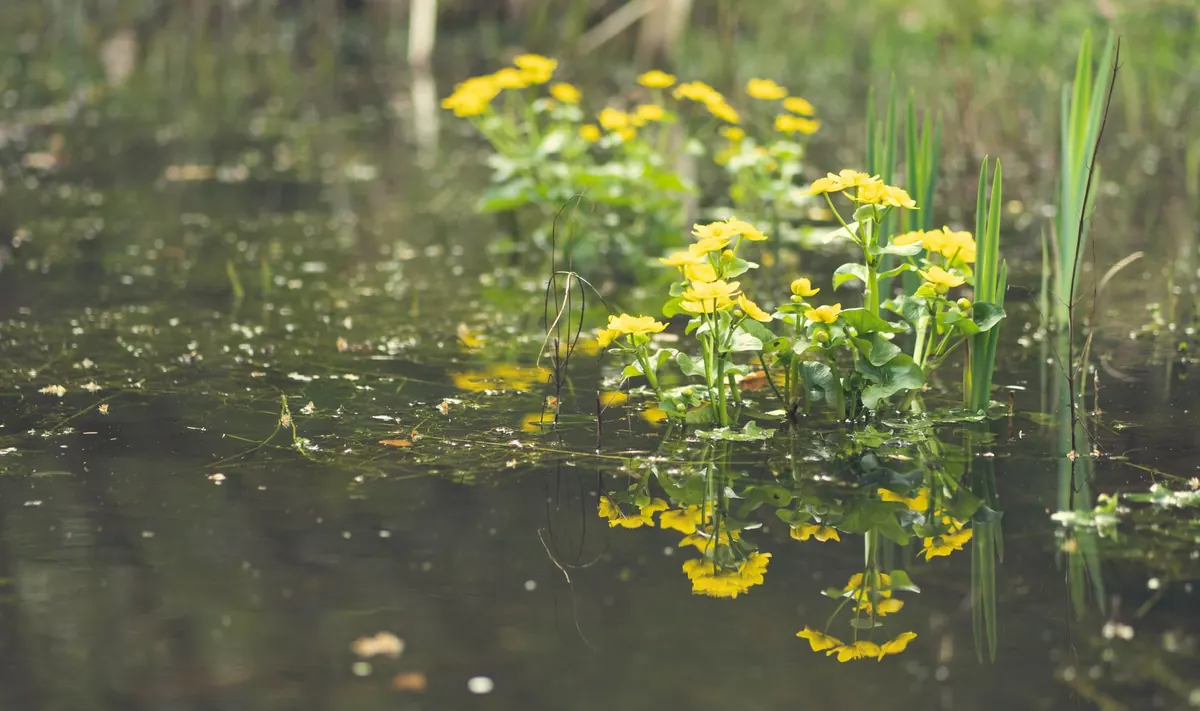
Stems, leaves, fallen litter and hummocky ground all create drag. That friction is the whole trick. When a stream is straightened and ditched, water shoots through in hours. When it spreads into a marsh, it may sit for days, spreading across a wide, shallow surface. Velocity drops, and so does everything riding in the flow.
Sand and gravel settle first, then silt and clay — and clay is where a lot of pollution hides. Phosphorus, metals, oils and bacteria cling to fine sediment particles. Every grain that settles to the bottom takes its cargo out of the water column with it.
Slower water also means more infiltration. Some of it soaks down to recharge groundwater instead of racing downstream, which reduces the surge that scours streambanks and dumps sediment into lakes. A wetland isn't a strainer. Think of it as a settling basin with an enormous, tangled surface area.
Chemistry in the Mud
Wetland soils are chemically busy. Clay particles and dead plant matter carry electrical charges that attract and hold dissolved pollutants, including ammonium and certain metals. Phosphorus binds to iron, aluminum and calcium compounds in the sediment. Under the low-oxygen conditions common just below the surface, bacteria that breathe sulfate produce sulfide, which reacts with dissolved copper, zinc, lead and cadmium to form solids that stay put in the mud.
This chemical storage is real, but it is not permanent. Change the conditions — drain the wetland, dredge it, let it dry out and oxidize — and some of what was locked away can mobilize again. That is why the mud matters as much as the plants. Phosphorus, unlike nitrogen, has no gas escape route in the everyday wetland cycle, so it accumulates in sediment year after year. Storage is not the same as removal.
The Microbial Workforce
Most of the actual cleaning is done by organisms you will never see. Bacteria and fungi coat sediment grains, plant stems and decaying leaves in thin films called biofilms. These films are the working surface of the wetland, and the chemistry that happens on them is what converts pollutants into harmless forms.
Nitrogen travels a specific path. Organic nitrogen in leaves and waste breaks down into ammonium. In oxygenated pockets near the surface, microbes convert that ammonium into nitrate. Then, in the low-oxygen zones a few centimeters away, other bacteria use that nitrate as an oxygen source and release nitrogen gas, which drifts into the atmosphere. Since the air is already mostly nitrogen, this is genuine removal — the pollutant leaves the water entirely.
The Only Real Exit
That gas step is why wetlands are so good at nitrogen. Plants take up nitrogen too, but unless the vegetation is harvested or buried in peat that never decomposes, that nitrogen returns when the plants die. Plant roots help in another way: they leak small amounts of oxygen into the soil, creating tiny aerobic zones next to anoxic ones. Nitrification and denitrification need opposite conditions, and a rooted wetland provides both within millimeters of each other.
Pollutant by Pollutant
- Suspended sediment — settles out as flow slows, carrying attached pollutants with it.
- Nitrogen — converted by microbes to nitrogen gas and released to the air.
- Phosphorus — bound to sediment and organic matter, then buried; vulnerable to release if the site is disturbed.
- Metals — precipitated as insoluble sulfides and stored in the mud.
- Pathogens — settle, die off under sunlight, and get consumed by other organisms.
- Oil and organic waste — broken down by microbes, given enough time and oxygen.
Not Every Wetland Cleans the Same Way
A sedge meadow, a cypress swamp and a peat bog are different machines. Marshes with dense emergent plants are excellent at trapping sediment because they slow water so effectively. Forested swamps process nitrogen well but shade out the dense plant growth that drives uptake. Bogs are acidic and nutrient-poor — they store enormous amounts of carbon, but they are poor at stripping nutrients and shouldn't be relied on for that.
Constructed wetlands can be designed for a specific job, with the right depth, substrate and planting plan for the pollutants in question. What matters most is residence time — how long water actually stays in contact with soil, roots and microbes. Other factors: the density and type of vegetation, soil chemistry, the season, and how large the wetland is compared with the area draining into it. A small pond at the end of a big storm pipe will not keep up.
Where the Process Stalls
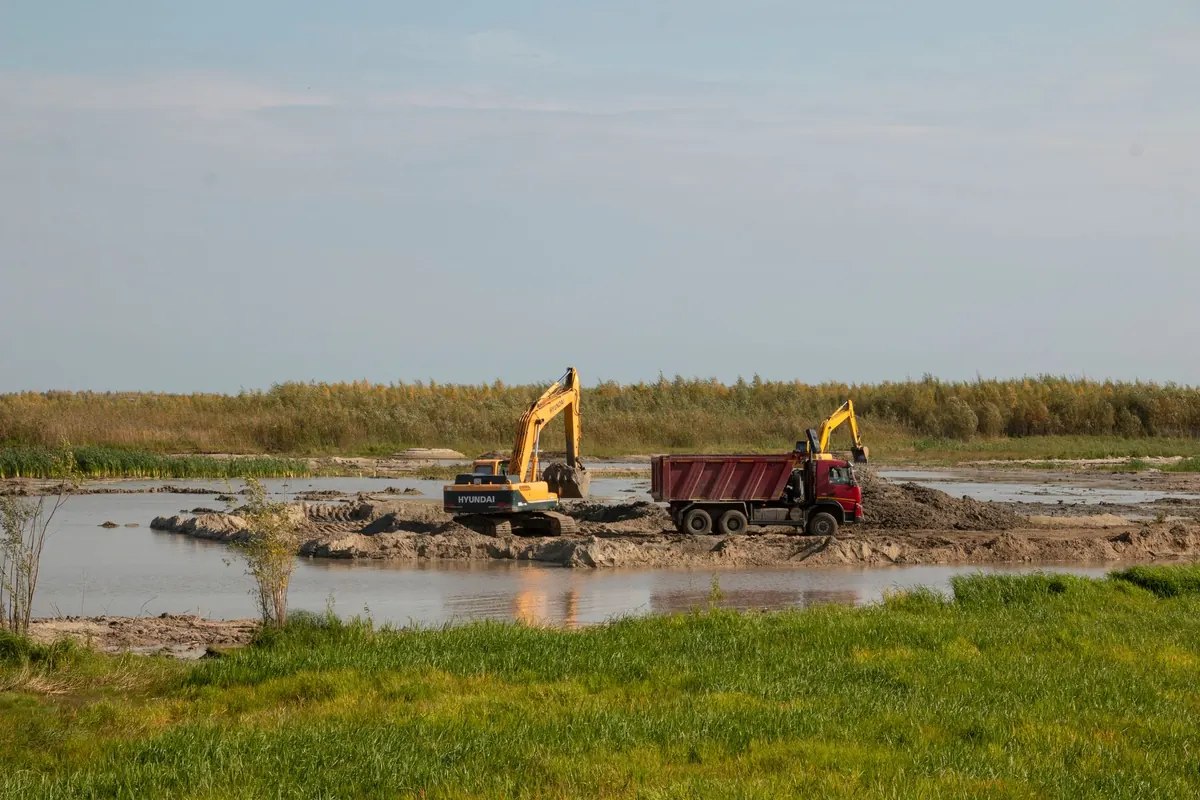
Wetlands are not unlimited treatment plants, and treating them that way damages them. Heavy storms push water through too fast to be cleaned. Winter slows microbial activity just as nutrients from fall decay arrive. A toxic spill can kill the microbial community outright.
Saturation is the quiet problem. A wetland that has absorbed phosphorus for decades can begin releasing it, especially if sediments turn anoxic and iron-bound phosphorus dissolves. Those same low-oxygen conditions can convert mercury into methylmercury, which moves up the food chain. Wetlands also produce methane, a potent greenhouse gas. None of this argues for draining them — it argues for controlling pollution at the source rather than expecting the marsh at the bottom of the hill to fix everything.
Keeping the Filter Working
The practical work is mostly about restraint. Leave a wide strip of native vegetation between lawns or fields and the water's edge, and don't mow it to the mud. Skip fertilizer near shorelines, pick up pet waste, and wash cars away from storm drains. If your home has a septic system, keep it maintained and inspected, and check with your local health department about requirements — failing systems leach nutrients and bacteria straight into groundwater and ditches.
Resist the urge to tidy. Dead stems, fallen leaves and soft mud are the working parts. Removing them removes the filtration. Watch for invasive plants such as common reed or reed canary grass, which can form monocultures that support less of the microbial and invertebrate life doing the cleaning, and report new infestations to your local conservation office.
Before you alter, ditch, fill or dredge any wetland, stop and check. Permits are usually required, and the rules vary by location, so contact your state or provincial environmental agency and a qualified wetland professional first. Volunteer monitoring programs and local land trusts are good places to plug in if you want to help. The cleaning happens on its own, in the dark, at no charge. Protecting the conditions that allow it is the part that needs us.
Photo: Nicole Menke / Pexels